Barterchain is a community-driven marketplace centred around exchanging goods, services, and skills without money. In early 2025, I was commissioned to conduct a UX audit and redesign of the existing mobile app, which suffered from usability issues across onboarding, navigation, and offer management.
The challenge was to identify areas of friction, improve the overall user experience, and create a visual language that better aligned with user expectations across both free and premium membership tiers.
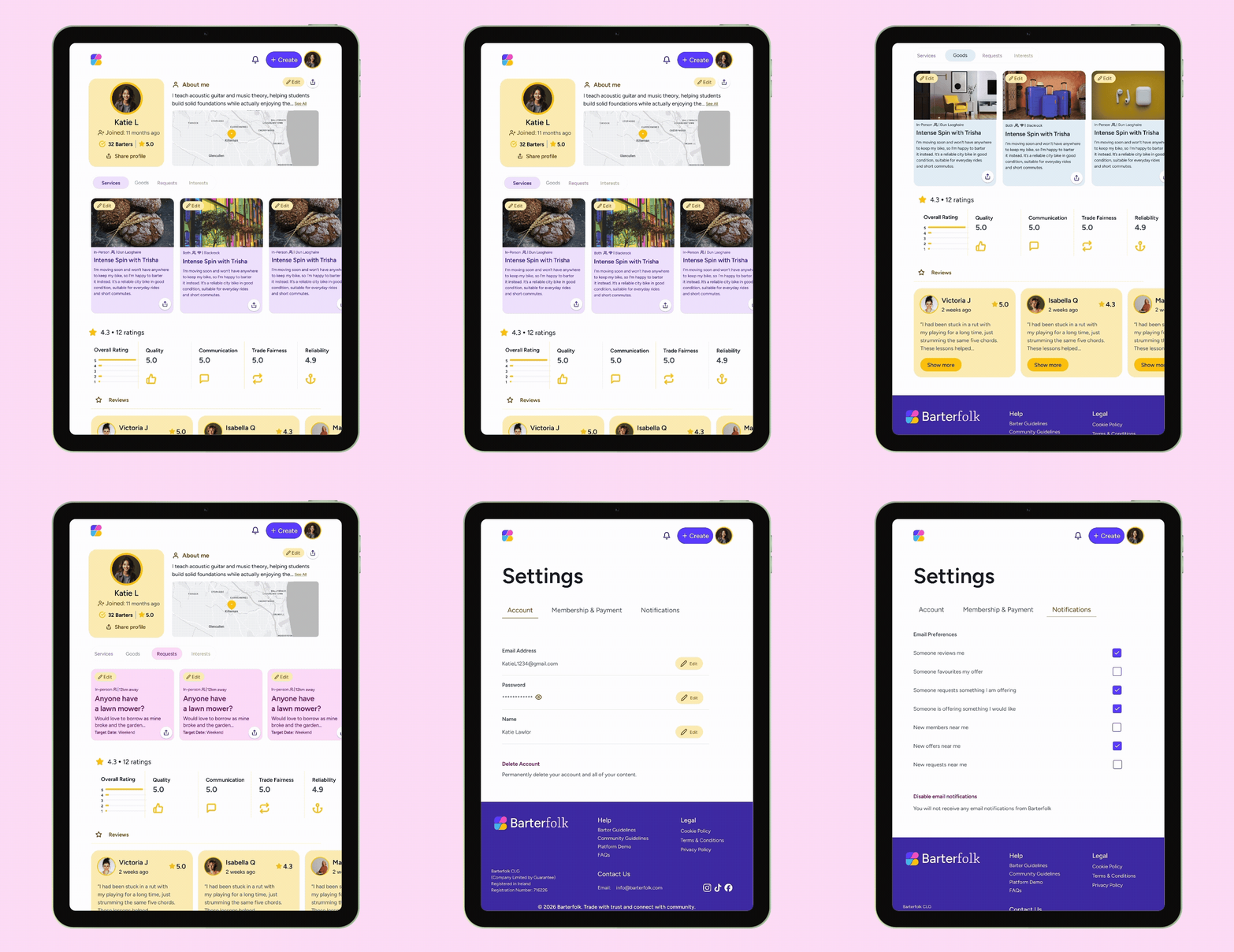
As the project evolved, the scope expanded from a mobile app redesign into a fully responsive platform designed for mobile, tablet, and desktop users.
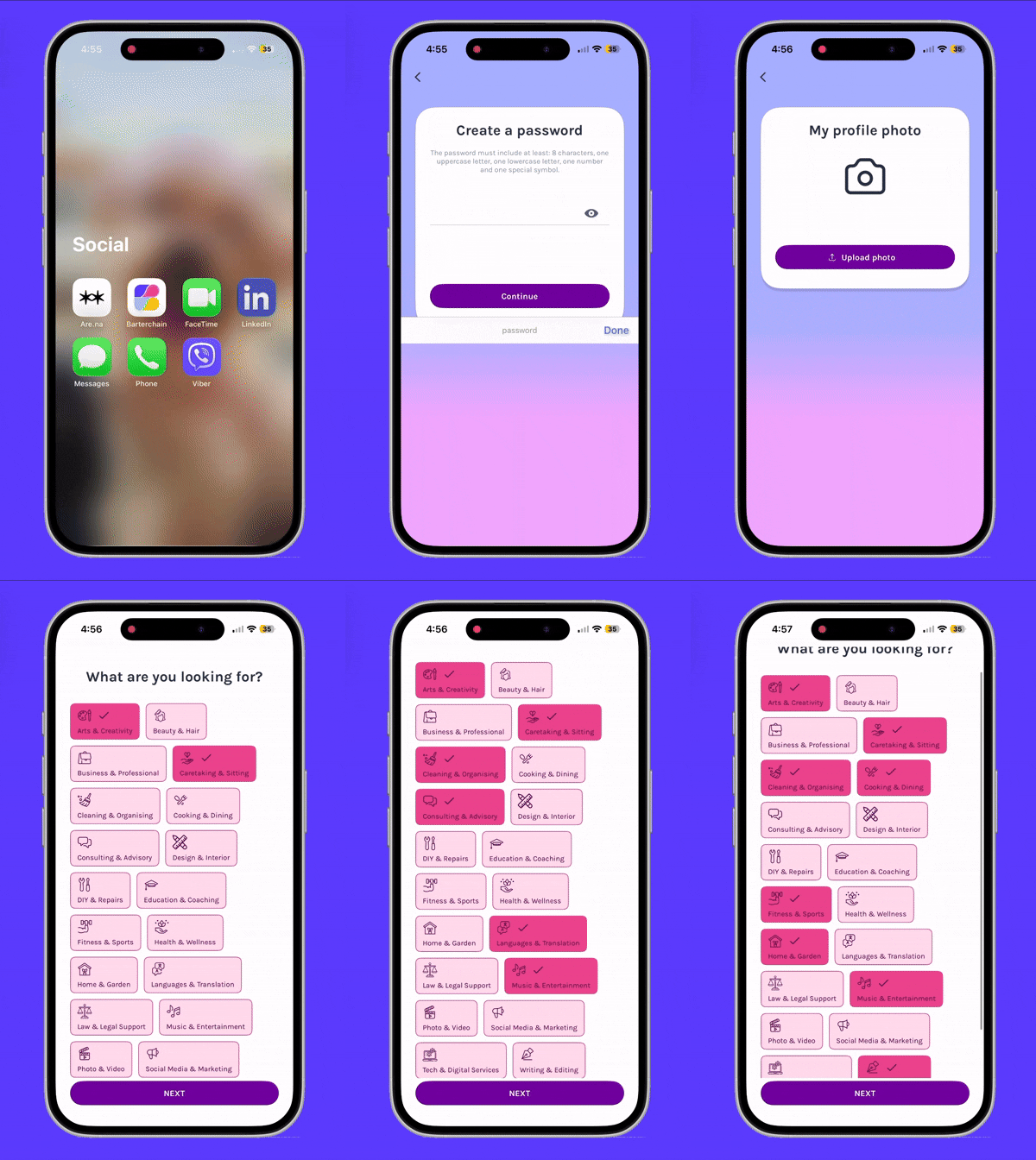
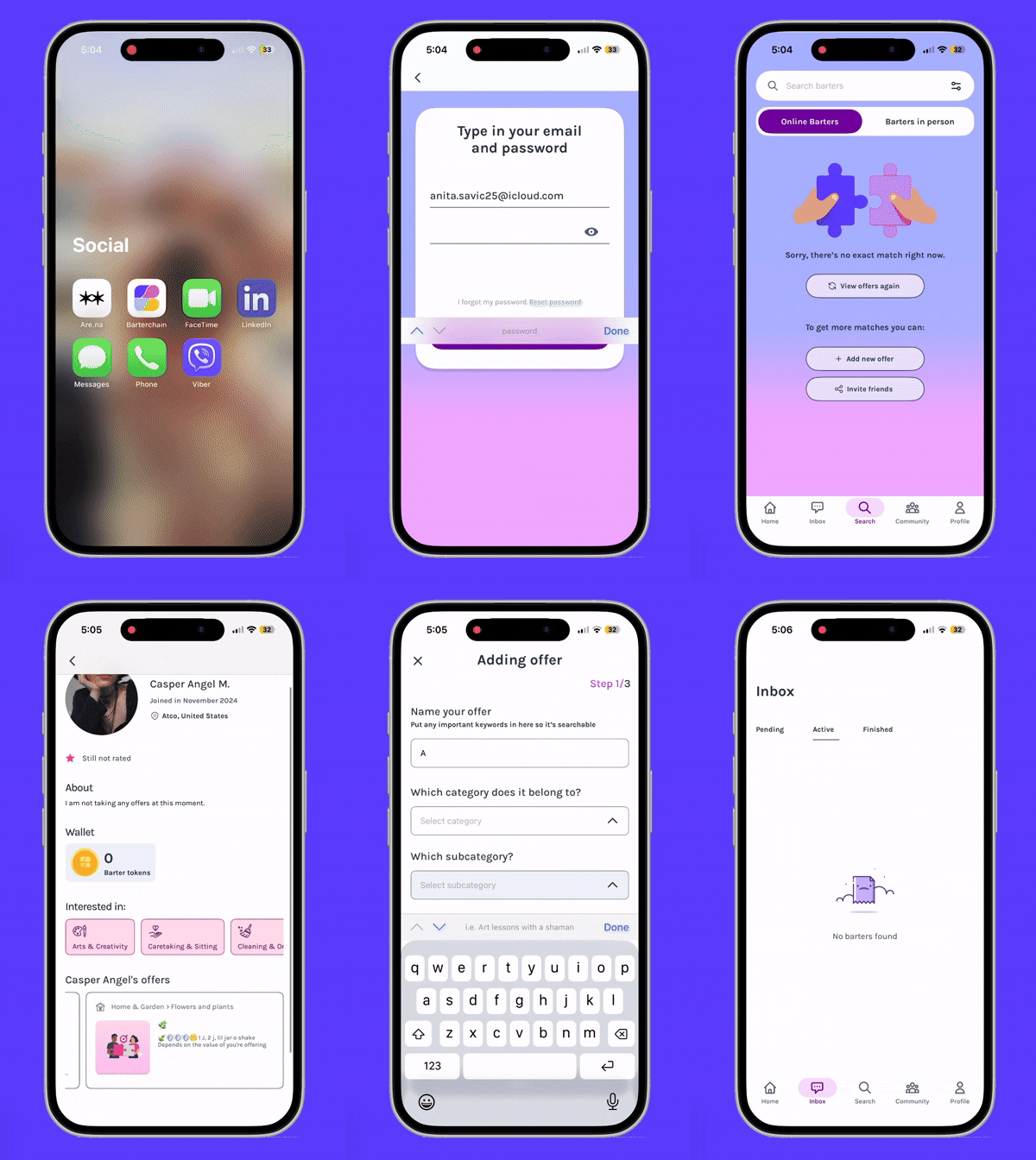
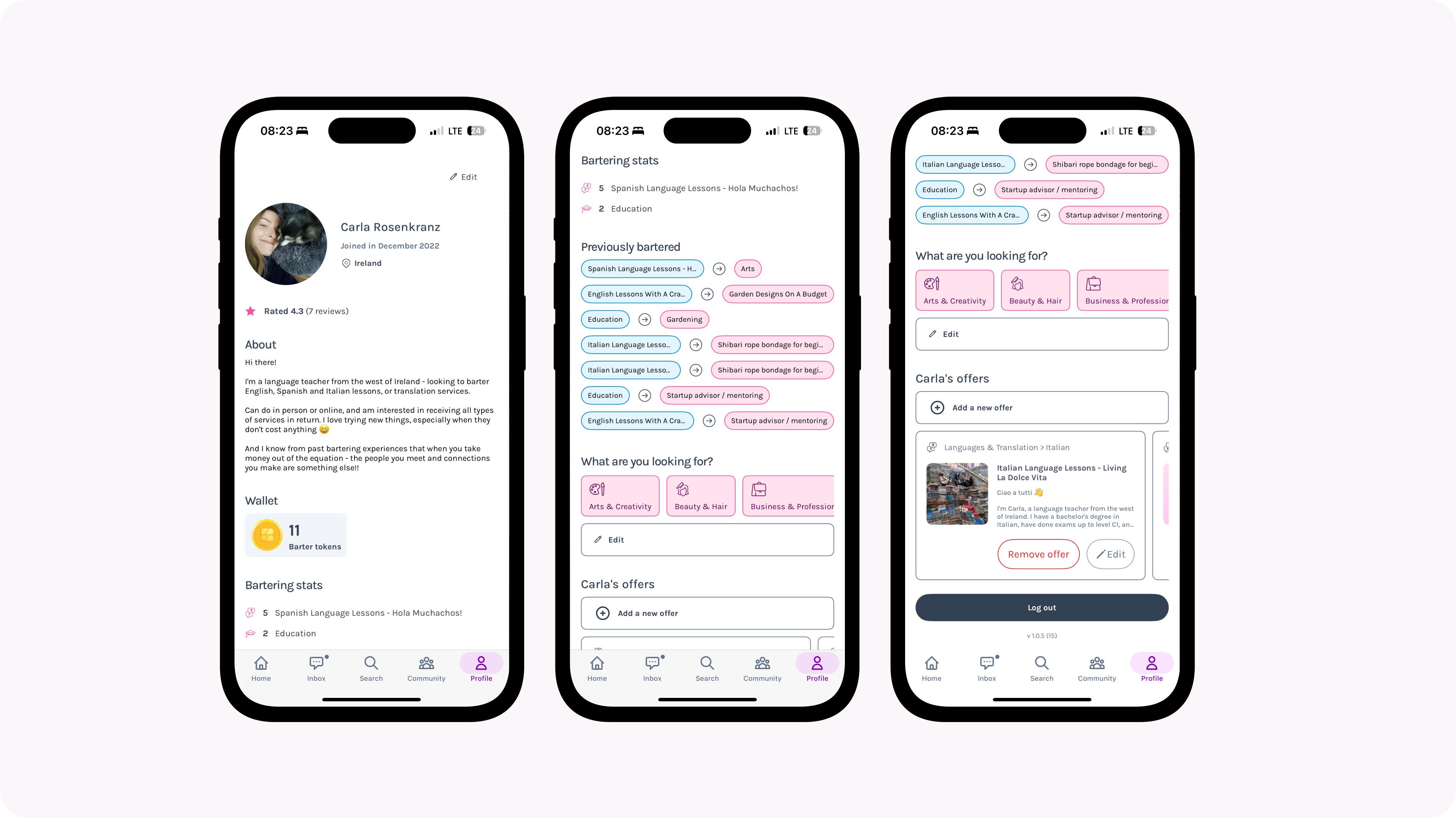
Evolving the Product Experience to be Human. Local. Real.
The first phase of the project focused on understanding the existing user experience through a UX audit and research process. This included a heuristic evaluation, customer discovery research, empathy mapping, persona development, user journey mapping, and an analysis of existing user flows.
The research highlighted several recurring issues. Users found onboarding overly complex, struggled with inconsistent navigation patterns, and experienced confusion when browsing offers or completing exchanges. These findings informed a redesign focused on simplifying key journeys and creating a more intuitive experience.
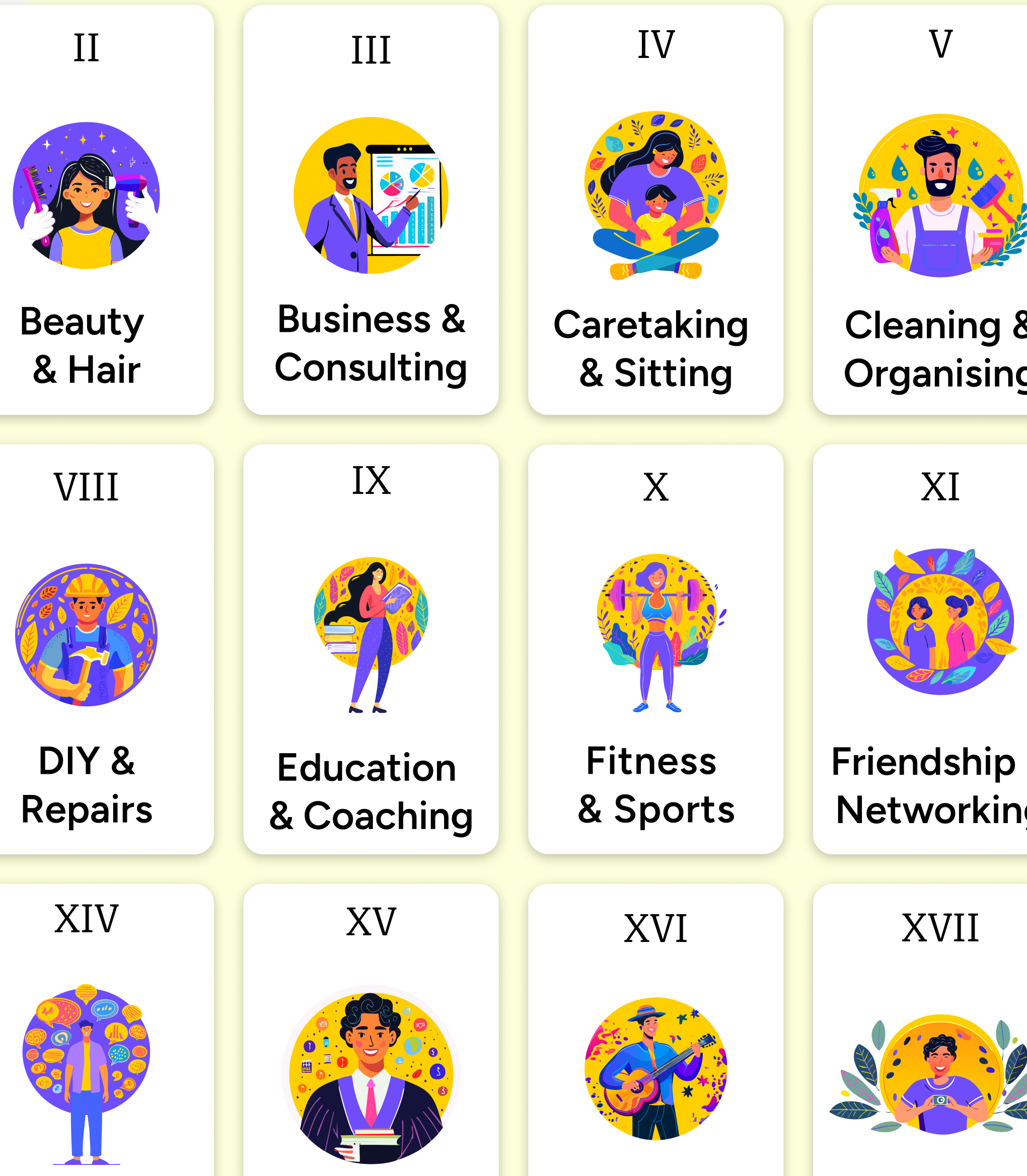
As the platform developed, so too did its visual identity. Early concepts used Adobe Firefly-generated illustrations integrated within Adobe Illustrator. During the second phase of the project, the visual language shifted towards collaged photography featuring human hands and everyday objects, creating a more tangible representation of the bartering process and placing greater emphasis on human exchange.
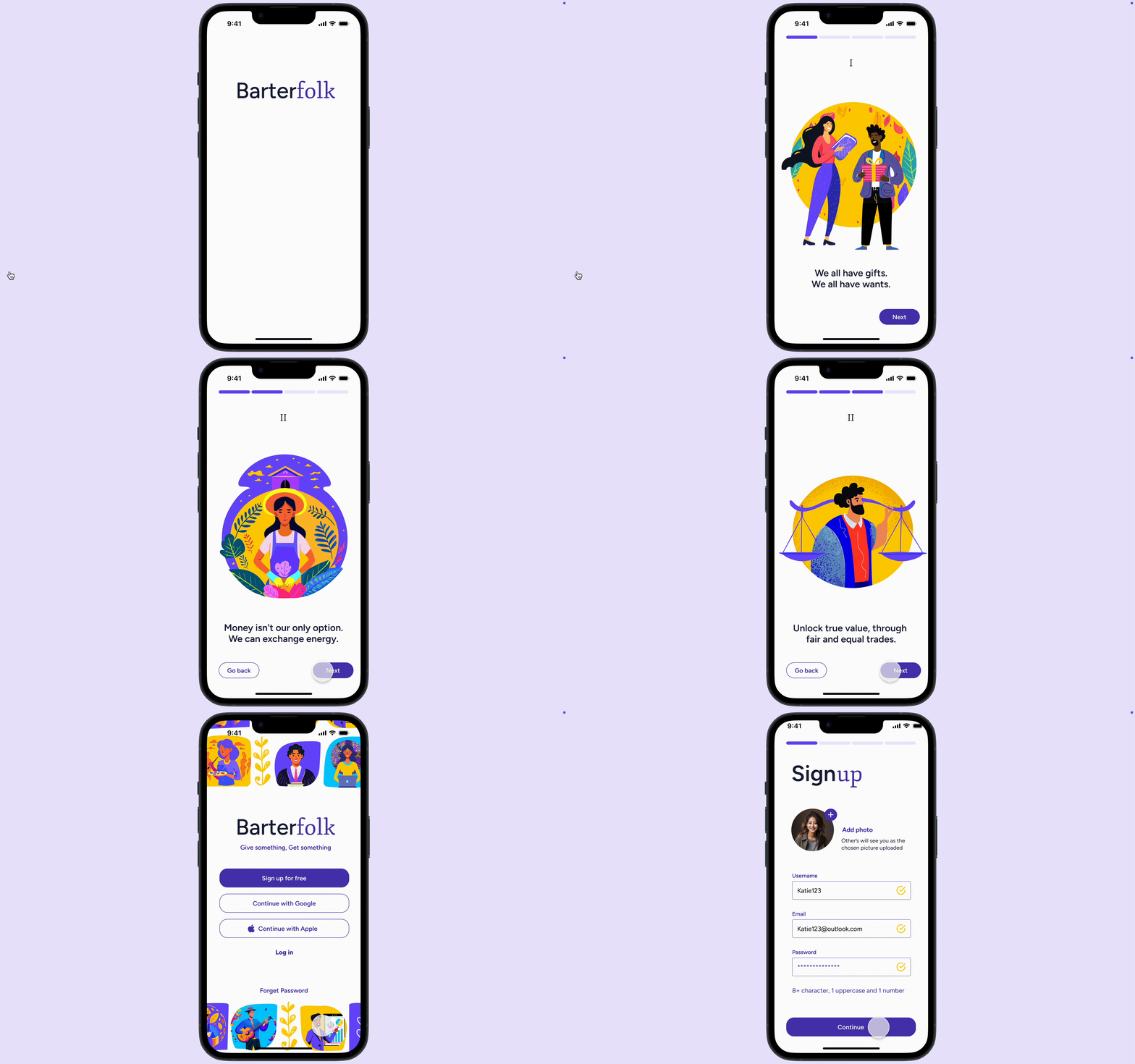
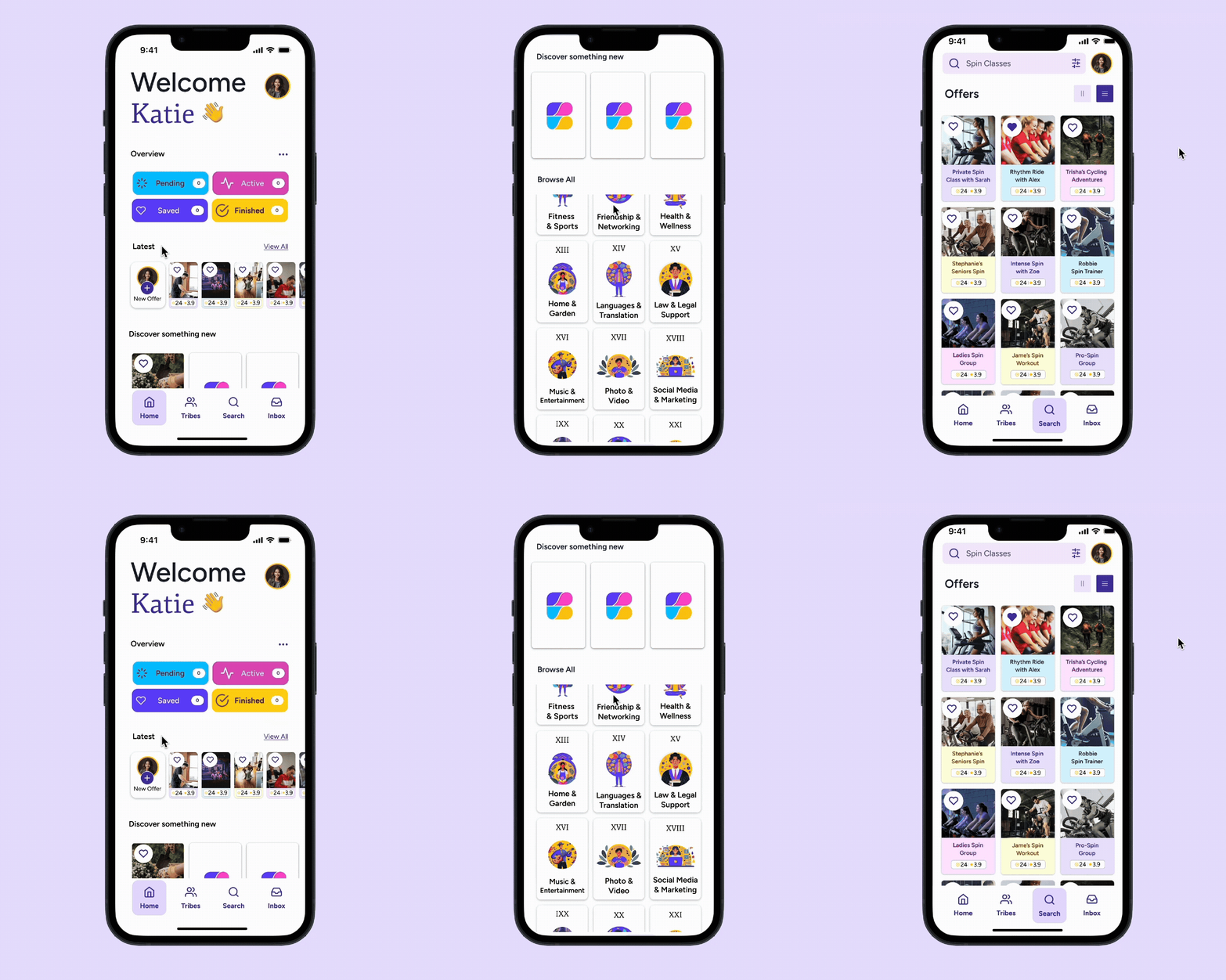
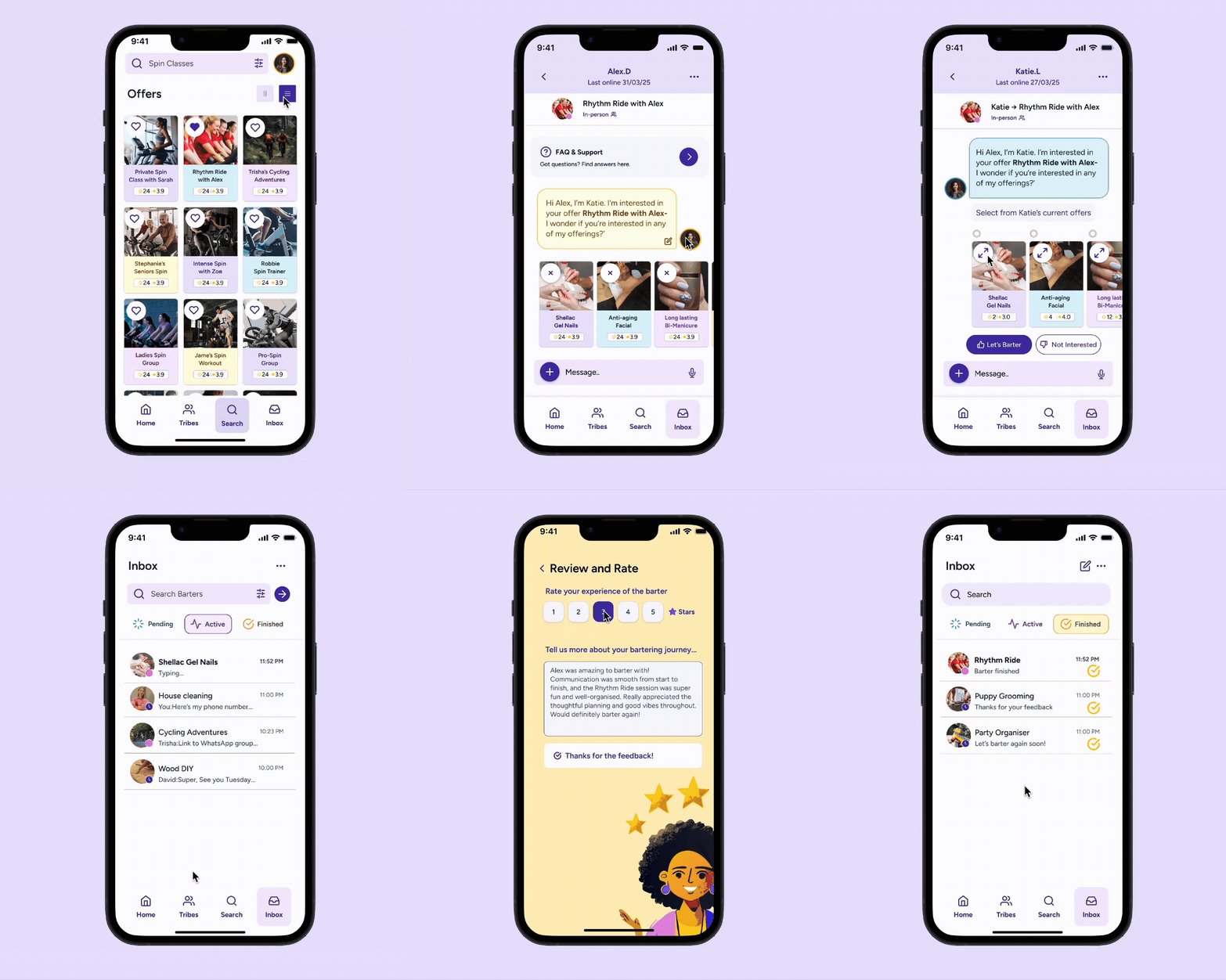
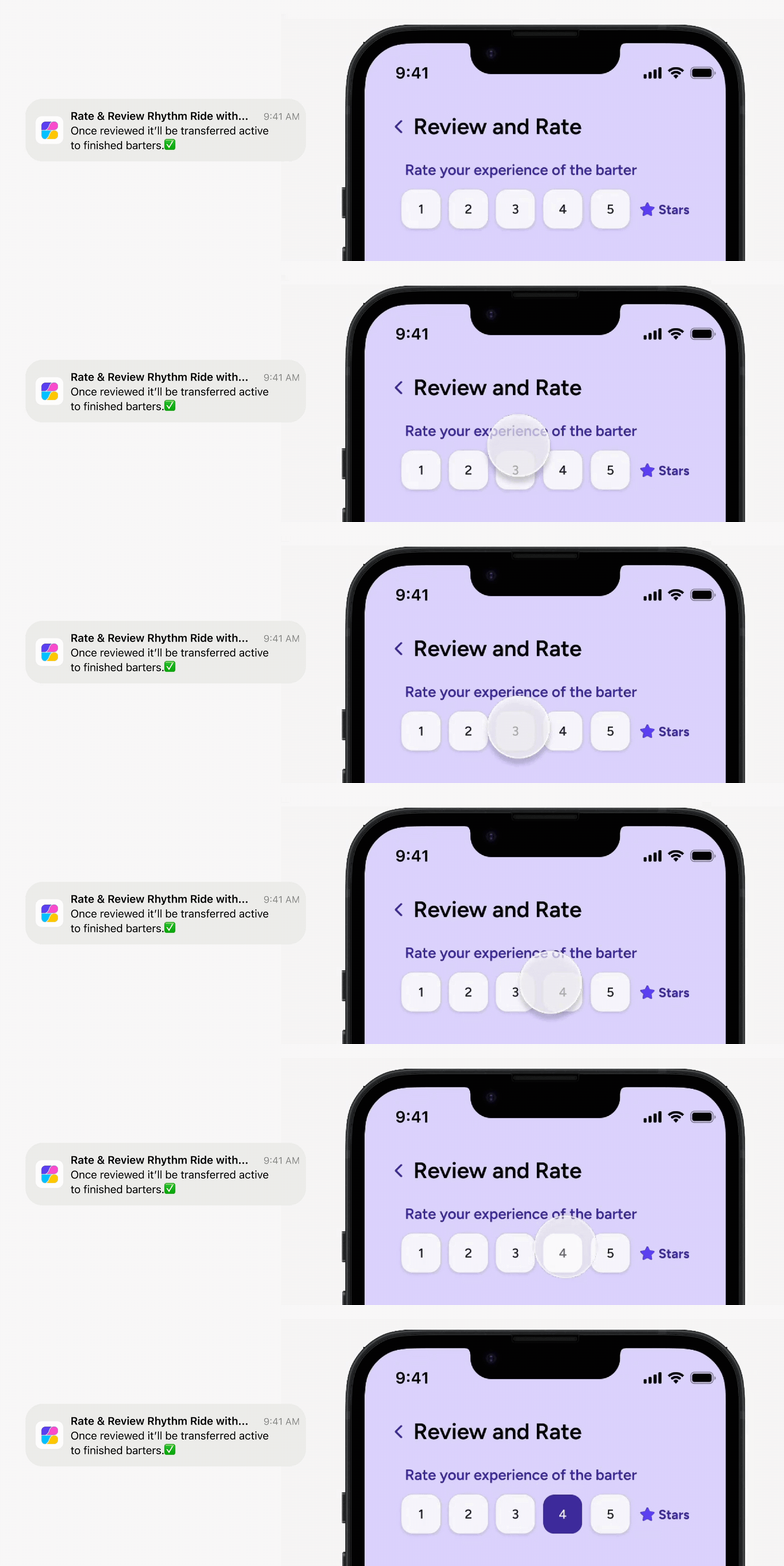
The redesign transformed Barterchain from a mobile-focused application into a responsive platform designed across mobile, tablet, and desktop devices.
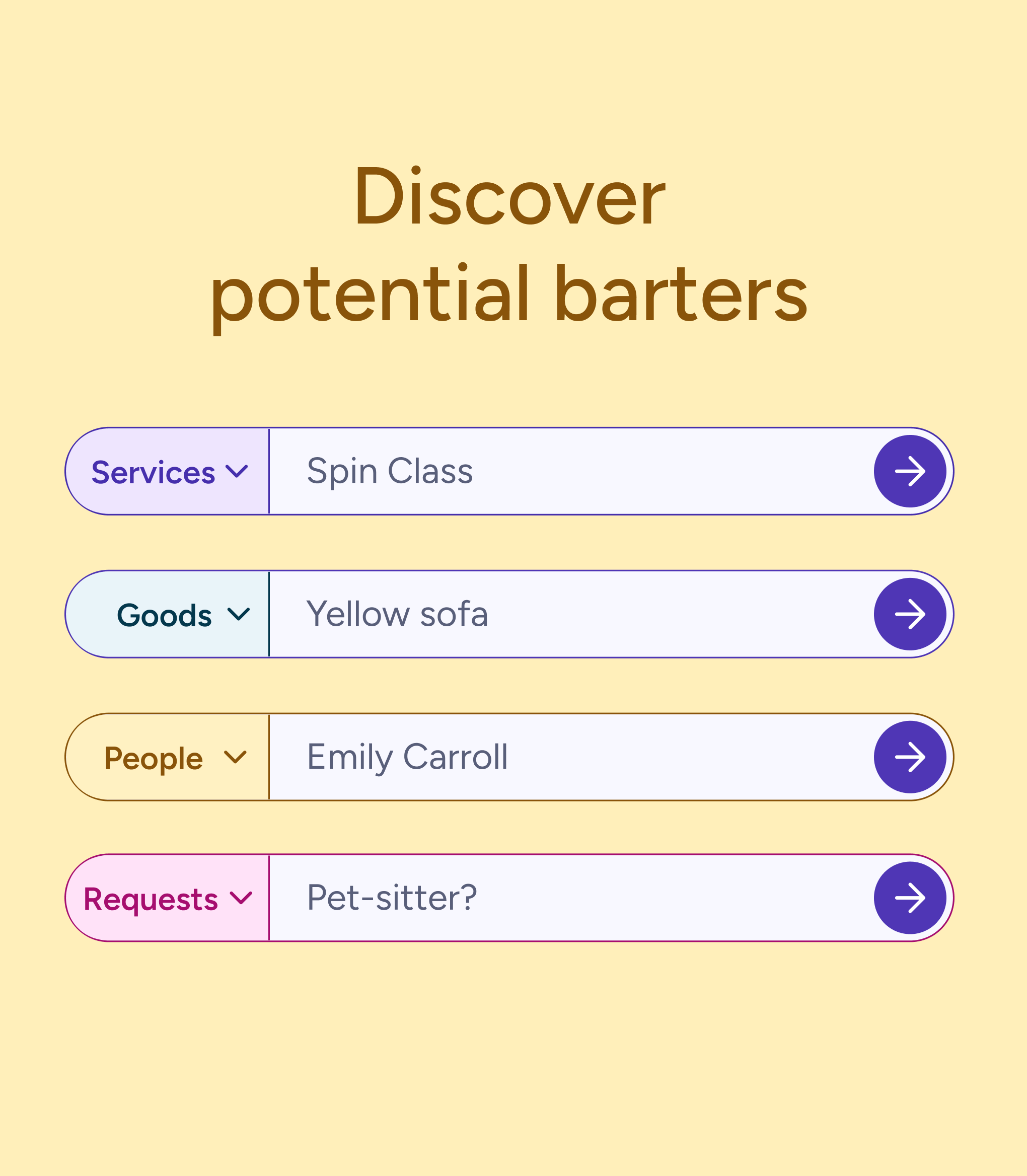
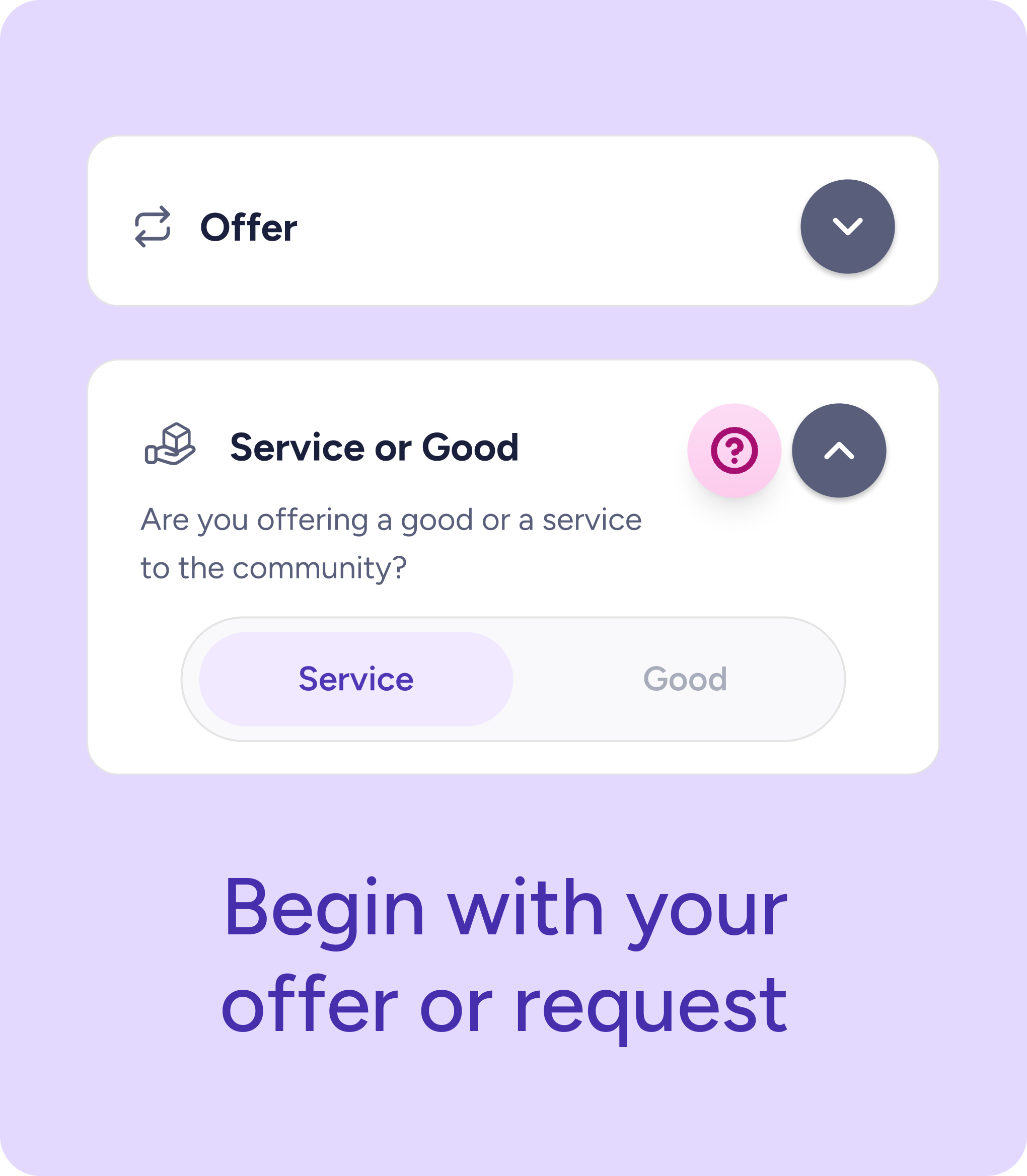
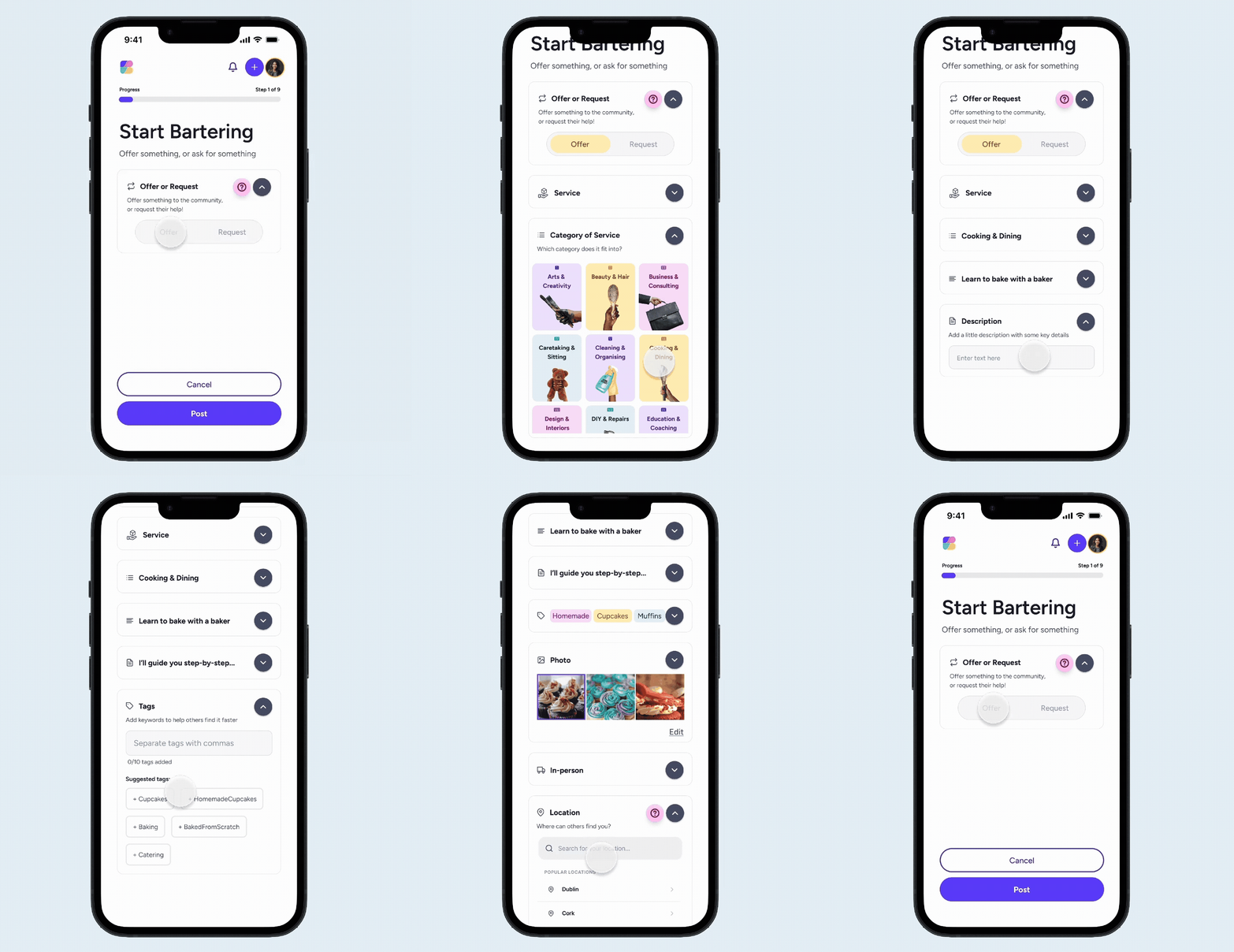
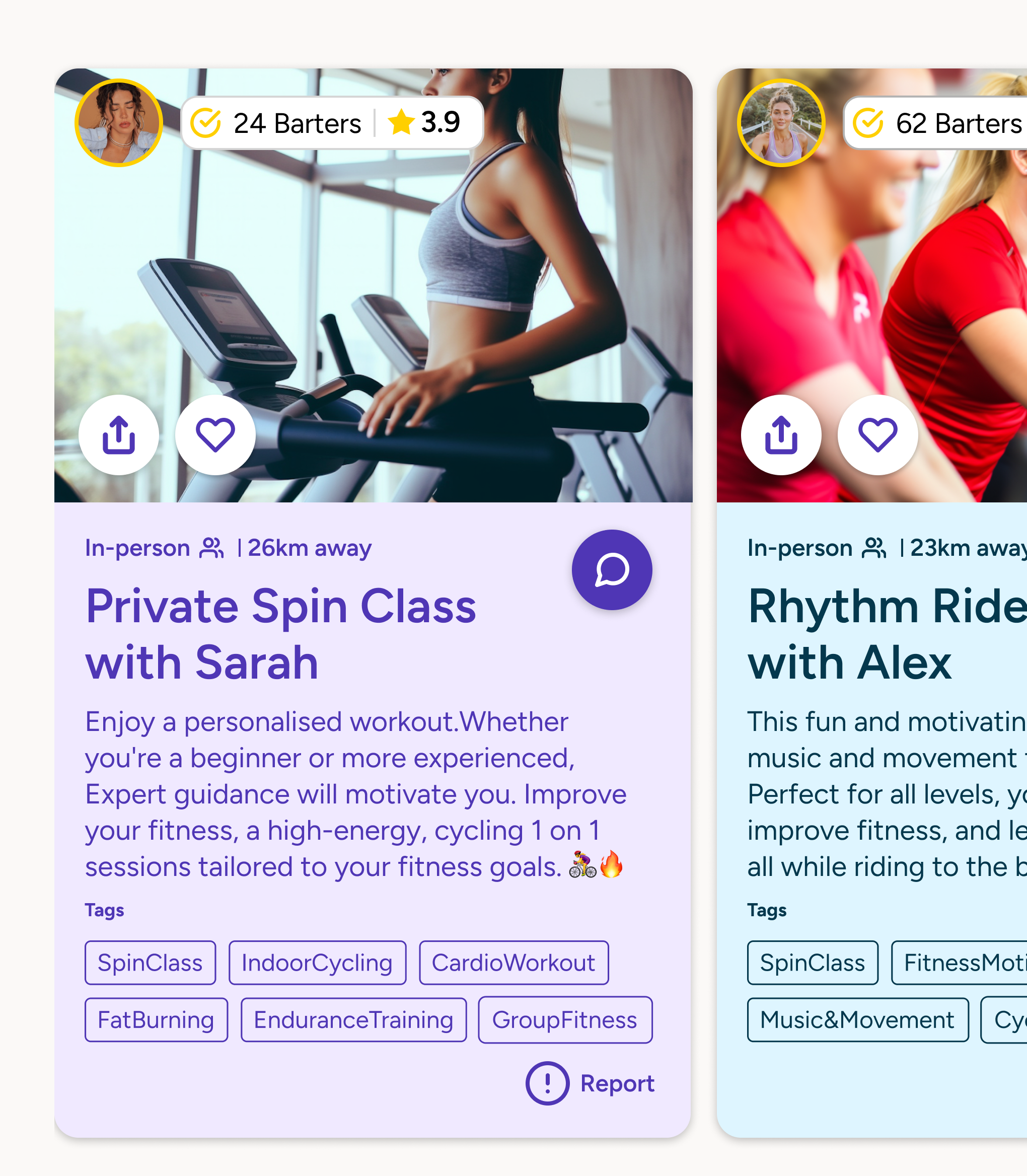
Core user journeys were simplified through clearer onboarding, improved navigation, and more intuitive offer creation and discovery flows. A scalable component system was developed to support consistency across devices while allowing the platform to adapt to different screen sizes and interaction patterns.
The visual identity evolved from illustration led concepts to a collage based system using royalty-free photography. By pairing human hands with exchanged objects, the design communicates the platform's core purpose connecting people through the exchange of skills, goods, and services.
The project is currently in the handoff phase. While the responsive interface, user journeys, and visual language have been established, elements of the wider service ecosystem remain under development as product decisions continue to evolve.